
Date: 2026-05-23
In the past, knee operated wash sink was mainly found in specialized environments such as hospitals and food processing facilities. However, in recent years, it has increasingly appeared in commercial kitchens, schools, airports, shopping malls, and public hygiene areas. At first glance, a knee operated design may seem like nothing more than a simple “hands-free” structure. But once deployed in real high-traffic environments, its value extends far beyond hygiene alone. It also addresses a range of operational concerns, including equipment stability, long-term maintenance costs, and workflow efficiency.
In residential settings, faucets mainly serve as basic water fixtures. But in high-traffic environments, a single handwashing station may be used hundreds or even thousands of times per day. Especially in restaurant back-of-house areas, food processing facilities, and hospitals, handwashing is not merely a personal hygiene task — it is a critical part of the overall hygiene management process.
Traditional manual faucets have a long-standing issue: after washing their hands, users still need to touch the faucet again to turn the water off. This means clean hands immediately come back into contact with high-touch surfaces. According to food safety standards and related research published by NSF International, “re-contact with contaminated surfaces after handwashing” is considered one of the important sources of cross-contamination risk in food handling environments. As a result, many commercial kitchens have started rethinking handwashing workflows in order to reduce this type of “recontamination through touch.” The biggest advantage of a knee operated design is that it completely removes hand involvement from the control process. Users only need to lightly press the knee panel to control water flow, allowing both hands to remain untouched throughout the entire process. Although the structure itself is simple, it aligns more naturally with the operational logic of high-traffic environments. Its purpose is not to replace one technology with another, but to make workflows more continuous and less interrupted.

A knee operated structure is essentially a form of “motion path optimization.” Users can activate or stop water flow with a simple knee touch, without interrupting the work already being performed by their hands. In high-frequency operating environments, the value of this design is mainly reflected in three areas: shorter workflows, smoother operation continuity, and more direct feedback. This becomes especially important when users are holding items, wearing gloves, or maintaining a clean hand condition, as no hand repositioning is required during operation.
At the same time, knee operated control systems rely on direct mechanical feedback rather than sensing recognition or response waiting time, making the operation feel more immediate and predictable. This type of “deterministic feedback” is highly valuable in repetitive, high-frequency environments. When applied to real high-traffic operations, the time saved during a single use may seem minimal. However, under hundreds of repeated operations per day, the accumulated efficiency difference becomes significant. For example, if a handwashing station is used 500 times per day, saving just 2 seconds per operation could result in more than 100 hours of accumulated time savings annually.
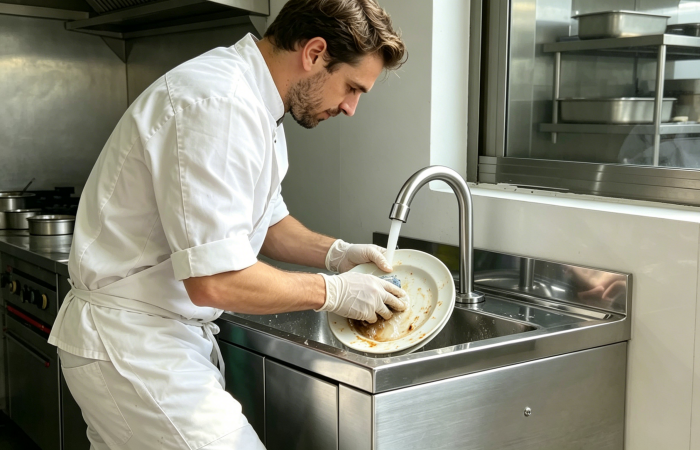
In commercial projects, equipment selection logic is gradually shifting from “initial purchase cost” to “long-term operating cost.” The real cost of a handwashing system includes not only the purchase price, but also maintenance frequency, replacement parts, water consumption, and operational disruptions caused by equipment downtime. In high-frequency environments, even a minor equipment failure can affect the continuity of the entire workflow.

As a result, more projects are focusing on material durability and structural stability rather than short-term pricing alone. Under this trend, stainless steel is being used more widely because of its stable long-term performance, including corrosion resistance, structural strength, and wear resistance. These characteristics ultimately determine whether the equipment can maintain stable operation under continuous high-frequency use.
|
NO. |
Material Comparison |
Standard Plated Material |
SUS304 Stainless Steel |
|
1 |
Long-Term Corrosion Resistance |
Medium |
High |
|
2 |
Stability in Humid Environments |
Standard |
Excellent |
|
3 |
Surface Wear Resistance |
Medium |
High |
|
4 |
Aging Tendency |
More Noticeable |
Lower |
|
5 |
Commercial Environment Adaptability |
Medium |
High |
In the design of a knee operated wash sink, the core challenge is not about adding more features, but about maintaining long-term operational stability under high-frequency usage while adapting to the rhythm differences of various environments.
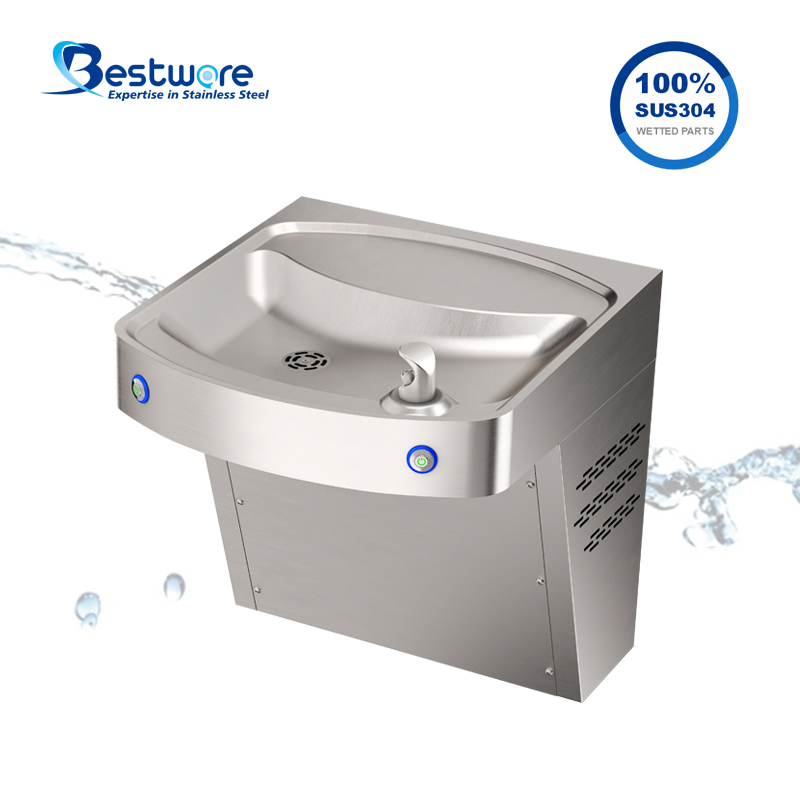
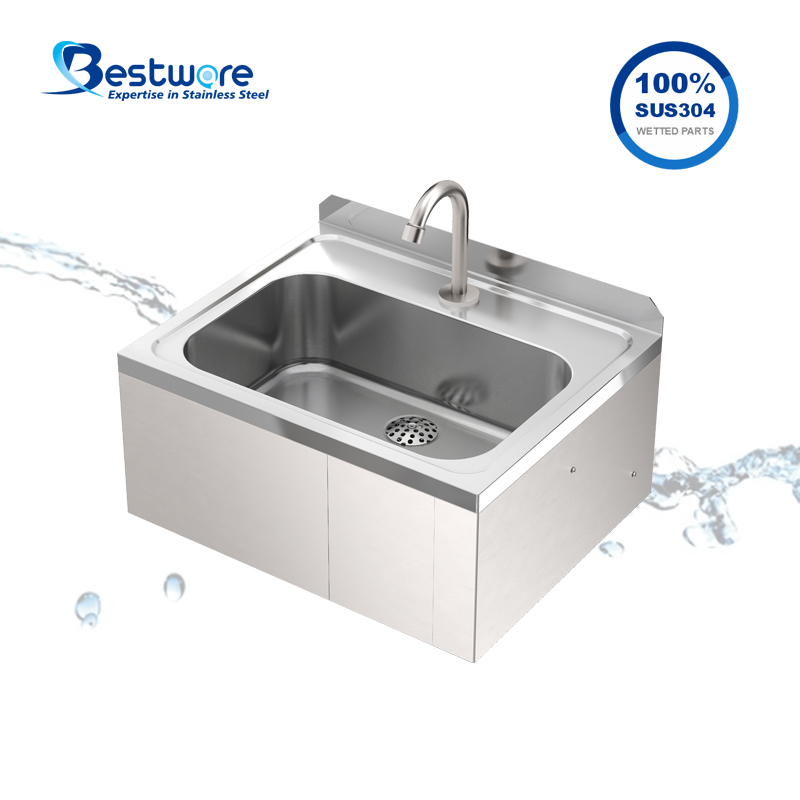
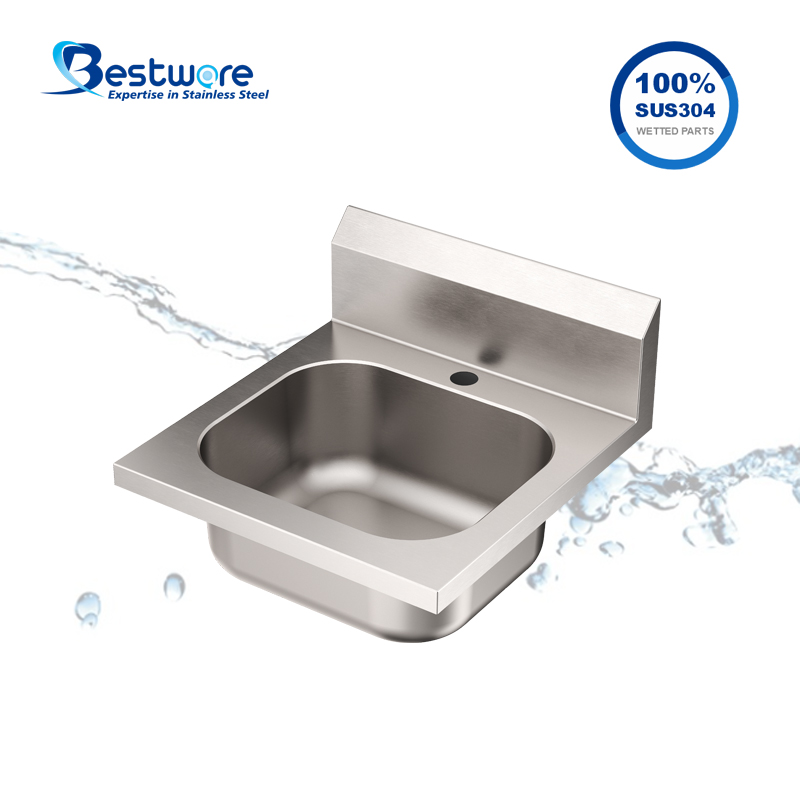
Bestware's wall-mounted knee operated wash sink is developed based on this logic. The unit is made from 100% food-grade SUS304 stainless steel and features a reinforced thicker structure to improve overall durability, making it better suited for continuous operation in high-traffic environments. The focus of this design is not simply the material itself, but the reduction of long-term deformation and wear through structural reinforcement.
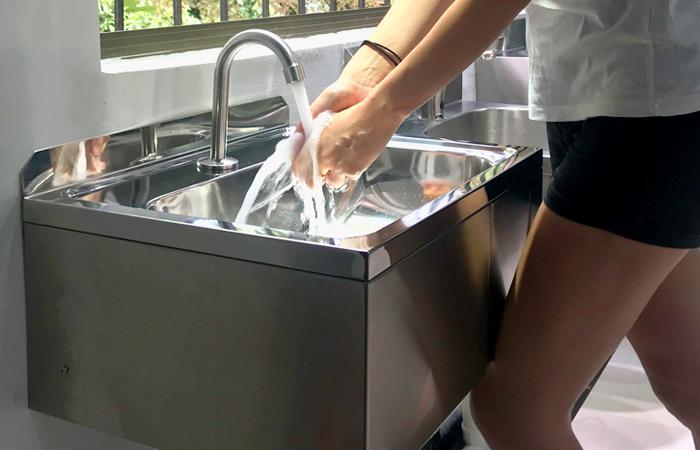
In terms of operating logic, Bestware offers optional water output modes, including instant flow and adjustable delay flow configurations. In instant mode, water flows while the panel is pressed and stops immediately when released, making it suitable for fast cleaning applications. In delay mode, pressing the panel activates water flow automatically, which then shuts off after a preset duration of 6–16 seconds, making it more suitable for public areas or water-saving management requirements. This configuration approach allows the equipment to better adapt to the operational needs of different environments.
|
Water Flow Mode |
Operating Method |
Recommended Application |
|
Instant Mode |
Water flows while pressed, stops when released |
High-frequency cleaning |
|
Delayed Mode |
Automatic shut-off after 6–16 seconds |
Water-saving public areas |
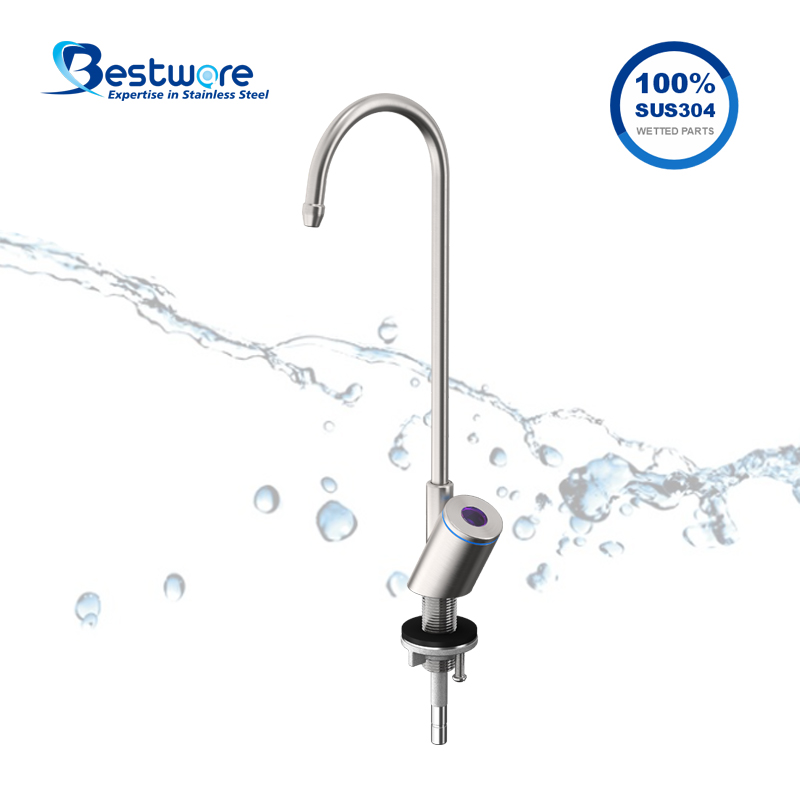
In addition, the wash sink features a gooseneck spout paired with a Neoperl aerator to provide smoother water flow and minimize splashing, improving overall comfort and consistency during high-frequency operation. Overall, the design philosophy of the system remains focused on one core objective: maintaining long-term operational stability in high-frequency environments rather than increasing functional complexity.
Knee operated designs are becoming increasingly common in high-traffic environments not because they are more complex or technologically advanced, but because they align more closely with real operational logic. By reducing direct hand involvement, they help create shorter, smoother, and more continuous workflows while maintaining long-term operational stability. For commercial spaces, the real value of equipment no longer lies in how many functions it offers, but in whether it can integrate reliably into daily operations over the long term. The value of knee operated systems continues to grow precisely because of this “simple yet sustainable workflow optimization” logic, gradually making them a standard configuration in more and more high-frequency usage environments.
Why Are Apparently Simple Knee Operated Designs Becoming More Popular in High-Traffic Environments?
4 Common Mistakes in Laboratory Faucet Procurement: What Are the Truly Critical Selection Criteria?
Bestware at NRA Show 2026 USA: Showcasing Commercial Stainless Steel Water Solutions
Does Repeatedly Pressing a Metering Faucet Extend the Water Flow Time?
One-stop Solution Provider of Stainless Steel Commercial Faucets
Email: business@bestware-stainless.com
after-sales@bestware-stainless.com
Tel: +86 18929047065
WhatsApp: +86 18929047065


WeChat: +86 18929047065


Website: www.bestware-stainless.com(Global Site)
www.bestware-sparkling.com(Water Dispenser)
Add: Block 8, No. 6, Jianda Nan Road, Jiangmen, Guangdong, China
Copyright © Bestware Hardware Production Co., Ltd. All Rights Reserved.
.jpg)
.jpg)
.jpeg)
.png)
.png)
.jpg)
.png)